

Unearthing ownership: Mines, minerals, and registered title
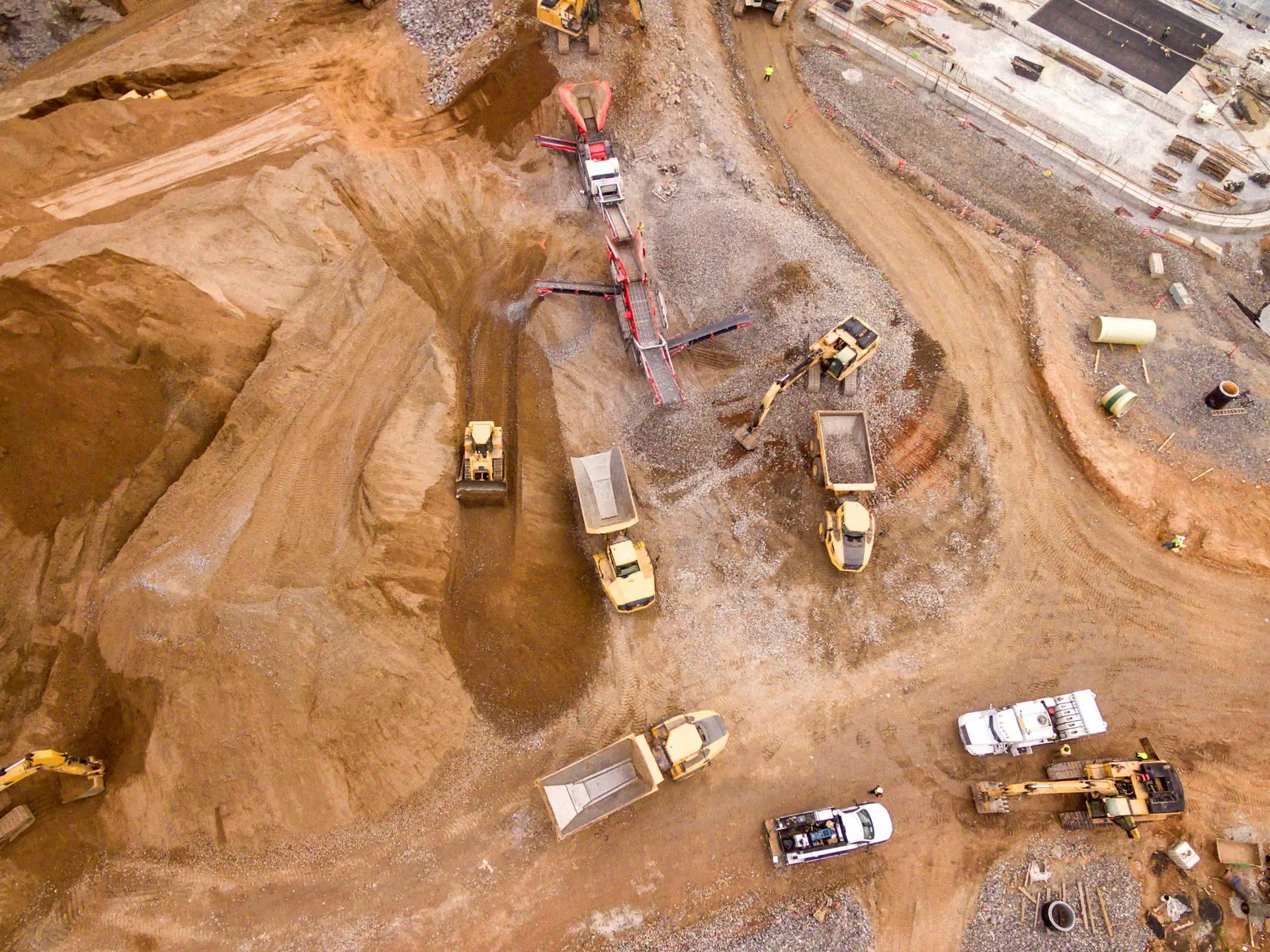
The ownership of land, seemingly straightforward, becomes complex when delving beneath the surface. Mines and minerals, often valuable resources, are subject to unique legal considerations, particularly within the framework of registered land titles. Understanding the nuances of their ownership is crucial for landowners, developers, and resource extraction companies alike.
- Specific exclusion of mines and minerals from a registered title
Registered land titles, maintained by the Land Registry, provide a definitive record of land ownership. However, this record can explicitly exclude mines and minerals. This exclusion typically arises from historical conveyances where the mineral rights were reserved by a previous landowner or the Crown. In such cases, the registered title will contain a specific note, often in the Property Register, stating that the title does not include mines and minerals. This notification serves as a clear warning to potential purchasers that they are acquiring only the surface rights.
The legal effect of such an exclusion is significant. It means that the registered proprietor of the surface land has no right to extract or exploit any minerals beneath their land. The ownership of those minerals remains with the party who reserved them, whether it be a private individual, a company, or the Crown. This exclusion effectively severs the surface ownership from the subsurface mineral rights.
For example, a title entry might state: "The mines and minerals under the land are excepted and reserved to [Name of party] and their successors in title." This explicit statement clearly indicates that the registered proprietor's ownership is limited to the surface. Due diligence during property transactions must always include a thorough examination of the title register to identify any such exclusions.
- The position where minerals are not referred to on a registered title
When a registered title is silent on the subject of mines and minerals, the presumption is that the minerals are included in the title. This reflects the general principle that ownership of land extends downwards to the centre of the earth and upwards to the heavens. However, this presumption is rebuttable.
The absence of a specific exclusion does not guarantee absolute ownership of the minerals. Historical documents, such as pre-registration conveyances or mining leases, may contain reservations or grants of mineral rights that were not carried forward to the registered title. These documents can still be effective in transferring or reserving mineral ownership, even if they are not reflected on the current register.
Furthermore, certain minerals are subject to specific statutory regimes. For instance, coal is generally owned by the Coal Authority, regardless of the surface ownership. Similarly, gold and silver are considered "mines royal" and belong to the Crown. Therefore, even in the absence of an exclusion, the registered proprietor may not own these specific minerals.
The practical implication is that a seemingly clear registered title may not provide complete certainty regarding mineral ownership. A prudent approach involves conducting thorough historical title investigations and searches to uncover any potential mineral rights held by third parties.
- The Land Registry's title guarantee in respect of minerals under a registered surface title
The Land Registry provides a title guarantee, which offers a degree of protection to registered proprietors against defects in their title. However, the scope of this guarantee is limited in relation to mines and minerals.
The guarantee primarily relates to the accuracy and completeness of the information contained in the register. If the register fails to record a known exclusion of mineral rights, the Land Registry may be liable for any losses suffered by the registered proprietor. However, the guarantee does not extend to undiscovered or unknown mineral rights that were not disclosed during the registration process.
Furthermore, the Land Registry does not guarantee the existence or extent of any minerals beneath the land. The title guarantee is concerned with the legal ownership of the land, not the physical resources it may contain. Therefore, if a registered proprietor discovers that they do not own the minerals under their land due to a historical reservation or statutory ownership, they cannot claim compensation under the title guarantee.
In essence, the Land Registry's guarantee provides assurance that the register accurately reflects the known legal position regarding mineral ownership. However, it does not offer protection against the inherent uncertainties and complexities associated with subsurface rights. Therefore, reliance on the title guarantee alone is insufficient to ensure absolute ownership of minerals. Comprehensive due diligence, including historical title investigations and expert advice, remains essential for navigating the intricacies of mineral ownership.
In conclusion, the ownership of mines and minerals is a complex area of property law, requiring careful consideration of registered titles, historical documents, and statutory regimes.
While registered titles provide a degree of certainty, they do not offer absolute guarantees regarding mineral ownership. Understanding the nuances of specific exclusions, the implications of silent titles, and the limitations of the Land Registry’s title guarantee is crucial for navigating this intricate legal landscape.
If you would like advice or assistance, please call our team today on 0113 207 0000.
Written by
Andrew Pedley
Andrew Pedley is a Partner in our Real Estate team and specialises in commercial and residential development.

More from the blog
Lorem ipsum dolor sit amet, consectetur adipiscing elit. Aliquam eu venenatis felis. Nulla placerat in nulla in eleifend. Donec placerat velit eget nulla.